Showing posts with label GSM. Show all posts

Wednesday, December 12, 2012

Immediate opening with Wipro Technologies Bangalore

0 comments

Exp: 9 – 14 Yrs
Education: BE/B.Tech
Designation: Program Manager / Technical Manager
Skills: NMS / EMS
Job Location: Bangalore

Job Description:
ARCHITECT - L1 - WARCHTL1
Core responsibility of an incumbent in Architect roles is to design an architecture solution which meets the needs of the customer. Different levels of Architect role vary in proficiency, expertise. At higher levels incumbent is more responsible for solution design, consulting the client on appropriate solution, defining and evaluating the architecture. At L1 Prime responsibility is to work on implementing architecture or design, implementing resue / automation strategy and reviewing the design. The incumbment at this level contributes on solution definition but is not accountable or decision holder of the same.
SUITe Skill(s)
Skill1 - Architecting (L1)
Responsible for contributing to the design & architecture for small to medium projects. Works on problems of highly complex scope, through expert usage of non-standard concepts & principles requiring high levels of judgement & interpretation. Works as a guide and sets directions for medium sized projects of reasonable complexity. Applies own judgement to independently determine a course of action, which is then executed by project teams. Role is capable of finding out new methods and processes to approach complex situations in there spective area(s) of expertise. Requires extensive knowledge of multiple development technologies/ expert knowledge of one technology. Expected to continue to build upon domain knowledge and technical/ proprietary skills to reach levels of expertise, while adapting standard principles to new or changed conditions in day to day work. Has the ability to respond to detailed queries. May be called upon to advise Sr Management on specialised technical issues. Responsible for coaching, guiding and mentoring junior members in the team to help them scale up faster.
Skill2 - Wireless Access (L2)
Should be either 'GSM 301', 'CDMA 301, 'WiMAX 310' or 'UMTS 301' certified. Should have completed at least 1 VTP in Wireless Access domain. Should have at least 12 months hands-on experience in Wireless Access technologies. Good understanding on the Wireless Access technologies/products - GSM, GPRS, EDGE,CDMA, CDMA-EVDO, WiMAX, UMTS, 3GPP/3GPP2.
Skill3 - Solution Architecture (L1)
1. Ability to take the functional and non-functional requirements and propose solution that will be able to meet the requirements. 2. Work with the design team to realize the architecture by providing suggestions on design options. 3.Review and validate the design decisions taken by the design teams. 4. Work with client architecture teams in - validate the non-functional requirements -discussing and providing inputs on architecture options 5. Present the architecture and design to necessary stake holders as required. 6. Working experience with at least one common SDLC methods (RUP, Velociq)

Regards,
Jyothi 

To respond,send an email to jyothi@aimplusstaffing.com
Enhanced by Zemanta
Read more...

Thursday, November 15, 2012

India 2G spectrum auction , govt earns only Rs 10,000 crore

0 comments
Mobile Phone
Mobile Phone (Photo credit: Wikipedia)
The much talked about 2G mobile phone spectrum auction ended in a damp squib on Wednesday with half of the airwaves on offer remaining unsold and government getting just about one-third of the targeted revenue.

According to preliminary estimates, the government received bids worth "much-less" than Rs 10,000 crore in an auction that ended in two days, a far cry from the 35-day bidding for the 3G spectrum in 2010 that got Rs 67,719 crore.

The government was targeting Rs 28,000 crore from the sale of 2G spectrum in the GSM band.


Videocon and Idea won spectrum in 7 circles while Telenor got spectrum in 4 circles. Airtel and Vodafone won spectrum in one circle each.

None of the five companies in fray bid for a pan-India spectrum for which the reserve price was set at Rs 14,000 crore for 5 Mhz of airwaves.

The scant interest in the 2G auction was attributed to high base price.

The government had put on auction a substantial part of the spectrum that was freed from Supreme Court in February this year cancelling 122 mobile permits issued by the then Telecom minister A Raja to nine telecom players in 2008.

The comptroller and auditor general (CAG) had in 2010 had said that the decision to give away spectrum at rates fixed in 2001 could have resulted in a presumptive loss of Rs 1.76 lakh crore to the exchequer taking the price garnered in the 3G auction as the benchmark.

The government thereafter fixed the base rate for 2G auction at almost equivalent to the third-generation (3G) auction price.

Further, as the government has promised to refund the license free paid in 2008, the net gain to the exchequer may be almost nil.

The tepid response to the auction may mean that the government will find it difficult to meet the revised fiscal deficit target of 5.3 per cent of GDP.

Sources said metro cities of Delhi and Mumbai, which accounted for 40 per cent of the base price of Rs 14,000 crore for 5 MHz of 2G spectrum, drew no bids at all.

Bids in most of the circles were around the base price with the exception of Uttar Pradesh East and West besides Bihar. Infact, the auction got extended into the second day only on back of interest in Bihar circle.


Enhanced by Zemanta
Read more...

Tuesday, July 3, 2012

How Adaptive Multi-Rate Codec (AMR) work in GSM ?

0 comments
  • Adaptive Multi-Rate (AMR) codec consists of a family of codecs (source and
    channel codecs with different trade-off bit-rates) operating in the GSM FR
    and HR channels modes
  • The AMR system exploits the channel performance and robustness added by
    the coding rates by adapting the speech and channel coding rates according
    to the quality of the radio channel
  • AMR adapts its error protection level (select its optimum channel mode and codec
    mode) to the local radio channel and traffic load conditions to deliver the best
    possible combination of speech quality and system capacity
  • Codec mode adaptation for AMR is based on received channel quality
    estimation in both MS and BTS, followed by a decision on the most
    appropriate speech and channel codec mode to apply at a given time
  • The basic AMR codec mode sets for MS and BTS are provided by BSC via layer 3
    signaling
  • MS shall support all speech codec modes, although only a set of up to 4
    speech codec modes is used during a call
  • GSM FR/EFR channel gross bit-rate is 22.8 kbit/s in GSM FR/EFR: 13 kbit/s
    speech coding and 9.8 kbit/channel coding (HR channel gross bit rate 11.4
    kbit/s) 
  • For AMR case, different codecs use different bit rate to encode speech (source
    coding). The rest of the gross bit-rate is used for channel protection
Enhanced by Zemanta
Read more...

Thursday, May 17, 2012

Immediate opportunity for Implementation Manager - Gurgaon

0 comments
Position: Implementation Manager
Total experience: 6+ yrs
Job description:
6+ years product implementation management and customer Service and Support experience.
Understanding of Telecommunication industry product and services to include: Number Portability, Location Services, Networking (LAN/WAN, SS7, Frame Relay, X.25), Signaling Protocols (GSM and IS41), cellular switch interoperability, and hardware and software platforms (Tandem and Unix).
Strong Leadership skills.
Strong knowledge of Project Managements tool such as Niku Workbench or MS Project.
Excellent oral/written communication skills.
Strong Influence Management skills.
Strong Analytical and Problem Resolution skills.
Strong Organization skills.
Strong Control and follow-up skills.
Strong Risk Management skills.
Strong Facilitation skills.
Strong Conflict management and resolution skills.
Strong team building skills.
Marketing and/or product planning experience a plus.

Willing to work in a shift that starts from 12:30PM to 8:30PM

Note: Please send cvs only, who can able to attend the interview weekdays with short notice period.

Job Location: Gurgaon

If this interests you kindly forward, your latest updated profile as reply to this mail & we will call you at your convenient time for provide more details.

We would really appreciate if you refer any of your friends and colleagues....!

Thanks & Regards
Nagesh M.Y

Global Technologies
Cell:+91-99800 21291
nagesh@global-tech.co.in
www.global-tech.co.in

Enhanced by Zemanta
Read more...

Friday, February 17, 2012

WCDMA KPI Classification

0 comments
Monopole top 3G UMTS site

The KPI can be divided into following classes, and the counters related to the KPI should be well defined in the Performance Monitoring system of the RNC.


Coverage KPIs
  • UL Interference Cell Ratio
  • Soft Handover Ratio

Accessibility KPIs
  • IU Paging Success Ratio
  • Radio Access Success Ratio
  • RRC Setup Success Ratio (other)
  • RRC Setup Success Ratio (service)
  • AMR RAB Setup Success Ratio
  • VP RAB Setup Success Ratio
  • CS RAB Setup Success Ratio
  • PS RAB Setup Success Ratio
  • HSDPA RAB Setup Success Ratio
  • HSUPA RAB Setup Success Ratio
Retainability KPIs
  • CS Service Drop Ratio
  • AMR Call Drop Ratio
  • VP Call Drop Ratio
  • AMR Traffic Drop Ratio
  • VP Traffic Drop Ratio
  • PS Service Drop Ratio
  • HSDPA Service Drop Ratio
  •  HSUPA Service Drop Ratio

Mobility KPIs
  • Soft Handover Success Ratio
  • Softer Handover Success Ratio
  • HS-DSCH Service Cell Change Success Ratio with SHO (HSDPA to HSDPA)
  • Channel Handover Success Ratio (HSDPA to DCH)
  • Channel Handover Success Ratio (DCH to HSDPA)
  • Intra-frequency Hard Handover Success Ratio
  • Intra-frequency Hard Handover Success Ratio (HSDPA to HSDPA)
  • Inter-frequency Hard Handover Success Ratio
  • Inter-frequency Hard Handover Success Ratio (HSDPA to HSDPA)
  • CS Inter-RAT Handover Success Ratio (WCDMA to GSM)
  • PS Inter-RAT Handover Success Ratio (WCDMA to GPRS)
  • PS Inter-RAT Handover Success Ratio (GPRS to WCDMA)
  • HSDPA Inter-RAT Handover Success Ratio (WCDMA to GPRS)
  • SRNC Relocation Success Ratio
  • TRNC Relocation Success Ratio
  • E-DCH Soft Handover Success Ratio
  • E-DCH Service Cell Change Success Ratio with SHO (HSUPA to HSUPA)
  • E-DCH Service Cell Change Success Ratio with Inter-HHO (HSUPA to HSUPA)
  • E-DCH to DCH Handover Success Ratio (Intra Cell)
  • DCH to E-DCH Handover Success Ratio (Intra Cell)
  • E-DCH to DCH Handover Success Ratio (with Inter HHO)
  • HSUPA Inter-RAT Handover Success Ratio (UTRAN to GPRS)

Service Integrity KPIs
  • PS Service UL Average Throughput
  • PS Service DL Average Throughput
  • Service UL Average BLER
  • DL RLC Average Retransmission Ratio
  • HSDPA RLC Throughput
  • HSUPA RLC Throughput

Availability KPIs
  • Worst Cell Ratio
  • IU Paging Congestion Ratio
  • Admission Refused Ratio
  • Congested Cell Ratio
  • Unserviceable Cell Ratio
  • Average CPU Load
  • IUB Bandwidth Utilizing Ratio

Traffic KPIs
  • CS Equivalent Erlang
  • PS UL Throughput
  • PS DL Throughput
  • UL Traffic of Typical Radio Bearers
  • DL Traffic of Typical Radio Bearers
  • HSDPA Mean UE Number
  • HSDPA RLC Traffic Volume
  • HSUPA Mean UE Number
  • HSUPA RLC Traffic Volume
  • UL Traffic Volume of QoS Classes
  • DL Traffic Volume of QoS Classes
Above KPIs are from Huawe.
Enhanced by Zemanta
Read more...

Friday, December 16, 2011

Smarthome on the Smartphone: Smith Monitoring and Android Home Automation

0 comments
Image representing Android as depicted in Crun... With the number of Android smartphones on an uncontested rise, Smith Monitoring is proud to announce that its Smart Home system is fully compatible with the Android operating system. Users can download the free app from the Android Market, and have total control over their home automation and security system within minutes.
The Smart Home system is designed to give Android users the ultimate in connection: to their security system, to their thermostat, to their lights and appliances, to their video surveillance network. Users can arm or disarm their security system from anywhere in the world, fully control their Smart Thermostat as if they were working with the panel itself, remotely switch on or off lights and appliances, and view live or recorded streaming video from their wireless cameras. The system also sends email and text notifications to inform users of alarm activation, sensor disturbances, system settings changes, and even access logs.
At the heart of the Smart Home system, the Go!Control panel has a completely self-contained GSM cellular chip for secure wireless communication directly to the user’s Android smartphone. The Go!Control panel also contains a separate wireless controller, enabling the system to control and network the various modules in the system via secure protocols. The basic Smart Home package comes with the Go!Control panel, enabling wireless capability on smartphone or computer, 3 wireless door or window sensors, and 1 motion detector. The mid-range Smart Home Energy package adds 1 Smart Thermostat for complete wireless control and 1 light and appliance remote control module, which accepts two lights or appliances. The premium Smart Home Plus package contains all the previous modules in addition to 1 wireless video surveillance camera, allowing users to utilize the entire feature suite of the Smart Home system on their Android smartphone.
Smith Monitoring’s Smart Home systems have been designed to intertwine advanced wireless networking, solid security, and deep mobile integration. Android users can now enjoy the best in affordable home automation.
Smith Monitoring Inc. is headquartered in North Dallas and services home and businesses throughout Texas and Georgia. Fully committed to providing the latest technology and comprehensive security monitoring to the community that has given it success, Smith Monitoring has received the rank of “A” from the Better Business Bureau every year since its inception. Information about Smith’s Smart Home Package, modules, services, pricing, and more is available on the Smith Monitoring website.
Enhanced by Zemanta
Read more...

Saturday, November 12, 2011

GSM (A interface)

0 comments
The GSM logo is used to identify compatible ha... A interface between BSC and MSC consists of signaling and transmission channels.  TRAU placed at MSC compresses transmission data (coming from MSC), so we require fewer channels between BSC and MSC.

Signaling protocol stack is given in diagram below:


BSSAP (BSS Application Part) uses Connection Oriented services of SCCP. DTAP (Direct Transfer Application Part) forms a tunnel through which CM/MM messages are transferred to MSC. RR data is used by BSSMAP (BSS Mobile Application Part) for communication with MSC; part of RR data, in fact, is given to MSC.

BSSAP data received from SCCP has discriminator parameter to distinguish between DTAP and BSSMAP messages. Note that SCCP connection setup is done by BSSMAP. DTAP messages goes through BSSMAP established SCCP connection.

» BSC-MSC "A" interface - 8.06 (Use of SCCP/MTP), 8.08 (BSSAP Procedures) « 

Source:Internet 
Enhanced by Zemanta
Read more...

Thursday, November 10, 2011

Steps to improve TCH ASSIGNMENT SUCCESS RATE in GSM

0 comments
BTS (Base Transceiver Station).1) No dominant serving cell: The serving cell cannot cope with the TCH traffic.

2) Severe congestion on TCH: Failing TCH allocation for assignment or handover due to congestion

3) Low signal strength for call access: The signal strength might be higher on the BCCH than on the TCH.

4) Interference: Disturbance on SDCCH or target TCH

5) Faulty transceiver: Faulty equipment

The following procedure should be performed for TCH Assignment analysis:
For TCH assignment success rate, the first thing, check the TCH Time Congestion.
If there is congestion on TCH, it is recommend doing the dimensioning and adding TRU based on carried TCH traffic demand.
If there is no congestion on TCH, check the output power of the BTS. If the output power is low, increase the output power.
If the output power is ok, check the faulty BTS by extracting BTS error log.
If hardware fault found, swap or repair HW.
Perform drivetests to check the coverage and received RxLEV.
If no dominant cell or similar signal strengths of a few cells found during drivetests, it is recommended to add BTS.
If there is no problem on the dominant cell, check the interference whether co-channel or adjacent channel.
Check the disturbance whether it is on SDCCH or target TCH. If disturbance found, improve the frequency plan.
Mostly, the problems of low TCH assignment are TCH availability and interference.
Enhanced by Zemanta
Read more...

Saturday, October 22, 2011

TCH Drop in GSM Network

0 comments
Base Transceiver Station in Nakło Śląskie, Poland.
When the call was terminated by network due to any reason not by the user(MS) it's called TCH(Traffic Channel) drop


1. Radio Link Time-Out
Every time a SACCH message can not be decoded the radio link time-out counter is decreased by 1. If the message can be decoded the counter is incremented by 2. However, the value can not exceed the initial value. The initial value is set by the parameter RLINKT for radio link time-out in the mobile station and by RLINKUP for timeout in the BSC. If the mobile moves out of coverage and no measurement reports are received in the BSC, there will be a radio link time-out and the message Channel Release (cause: abnormal release, unspecified) is sent to the mobile station and the SACCH is deactivated in the BTS. A Clear Request message is sent to the MSC. To be sure that the mobile has stopped transmitting, the BSC now waits RLINKT SACCH periods before the timeslot is released and a new call can be established on the channel.

2. Layer 2 Time-Out
If the BTS never get an acknowledge on a Layer 2 message after the time T200XN200, the BTS will send Error Indication (cause: T200 expired) to the BSC, which will send Channel Release (cause: abnormal release, timer expired) to the mobile station and a Clear Request to the MSC. The SACCH is deactivated and the BSC waits RLINKT SACCH periods before the timeslot is released and a new call can use the channel. This is only valid if the call is in steady state, i.e. not during handover or assignment.

3. Release Indication
When the BTS received a layer 2 DISC frame from the mobile it replies with a Layer 2 UA frame to the mobile station and a Release Indication to the BSC. The system does only react on Release Indication if it is received during a normal disconnection situation. If such a message is received unexpectedly this will usually cause radio link time-out or timer T200 expiration as the mobile station stops the transmitting of measurement reports. It is also possible that the release will be normal depending on when the Release Indication is received.
4. MSC Time-Out
Normal Release:
If the MSC never received a response on a message (e.g. Identity Request) and there is no radio link time-out or layer 2 time-out, the MSC will send a Clear Command to the BSC. The time-out is depending on the message. When receiving Clear Command, the BSC will send a Channel Release (cause: normal release) and then deactivates the SACCH.
Reject (only SDCCH):
If the MSC never receives a response on the first message after Establish Indication, the MSC will send a reject message. If the connection was a Location Update it will be a Location Update Reject (cause: network failure) and if the connection was a mobile originating call (CM Service Request) a CM Service Reject (cause: network failure) will be sent. The MSC will then send a Clear Command to the BSC and the call is cleared by Channel Release (cause: normal release).
5. Assignment to TCH
Before sending an Assignment Command from the BSC at TCH assignment, the following two criterion have to be fulfilled:
a. There must be a TCH channel available, i.e. no congestion
b. The locating algorithm must have received at least one valid measurement report.
If either of the criterion is not fulfilled, Assignment Command will not be sent and a Channel Release (cause: abnormal release, unspecified) will be sent to the mobile station and a Clear Request to the MSC.
TCH Drop reason (1)
The classification of TCH Drop Reasons are arranged in the order of priority:
1.ExcessiveTiming Advance
2.Low Signal Strength
3.Bad Quality
4.Sudden Loss of Connection
5.Other Reasons
Excessive Timing Advance
The TCH Drop counters due to Excessive Timing Advance will pegged when the during the time of disconnection, the last Timing Advance value recorded was higher than the TALIM Parameter. This drop reason is commonly apparent to isolated or island sites with a wide coverage area.
Action:
Check if the cell parameter TALIM is < "63"
Solution:
Set TALIM to a value close to 63.
Tilt antenna/reduce antenna height/output power, etc. for co-channel cells.

TCH Drop Reasons (2)
Low Signal Strength on Down or Uplink or Both Links
The drops counters due to Low Signal Strength will be pegged when the Signal Strength during the last Measurement Report before the call dropped is below the LOWSSDL and/or LOWSSUL Thresholds. LOWSSDL and LOWSSUL are BSC Exchange Property parameters which is used only for statistics purposes and does not affect the behavior of calls. If both UL and DL Signal Strength are below the thresholds, only Drop due to Low SS BL will pegged. Normally a call is dropped at the border of large rural cell with insufficient coverage. Bad tunnel coverage cause many dropped calls as well as so called coverage holes. Bad indoor coverage will result in dropped calls. Building shadowing could be another reason.

Action:
Check coverage plots.
Check output power.
Check power balance and link budget.
Check if Omni site.
Check antenna configuration & type.
Check antenna installation.
Perform drive tests & site survey.
Check TRX/TS with high CONERRCNT.
Solution:
Add a repeater to increase coverage in for example a tunnel.
Change to a better antenna (with higher gain) for the base station.
Add a new base station if there are large coverage holes.
Block/Deblock TRX
TCH Drop Reasons (3)
Poor Quality on Down or Uplink or Both Links
The drops counters due to Bad Quality will be pegged when the Signal Strength during the last Measurement Report before the call dropped is above the BADQDL and/or BADQUL Thresholds. BADQDL and BADQUL (expressed in DTQU) are BSC Exchange Property parameters which is used only for statistics purposes and does not affect the behavior of calls. If both UL and DL Quality are above the thresholds, only Drop due to BAD Quality BL will pegged.
Problem on Bad Quality is usually associated with Co-channel Interference on BCCH or TCH. Faulty MAIO assignment can cause frequency collisions on co-sited cells especially on 1x1 Reuse. External interference is also one possible cause of problem on quality.

Action:
Check C/I and C/A plots.
Check Frequency Plan (Co-BCCH or Co-BSIC Problem).
Check MAIO, HOP, HSN parameters.
Check FHOP if correctly configured (BB or SY).
Check for External Interference.
Perform drive tests.
Solution:
Change BCCH frequency.
Change BSIC.
Change MAIO, HOP, HSN.
Change FHOP.
Record RIR or on-site Frequency Scanning to identify source of interference.
Use available radio features.
TCH Drop Reasons (4)
Sudden Loss of Connection
Drops due to Sudden Loss are drops that have not been registered as low signal strength, excessive timing advance, bad quality or hardware (other) reasons, and the locating procedure indicates missing measurement results from the MS.
There are some common scenarios that could lead to Sudden Loss of connections such as very sudden and severe drops in signal strength, such as when subscribers enter into buildings, elevators, parking garages, etc., very sudden and severe occurrence of interference, MS runs out of battery during conversation, Handover Lost, BTS HW faults, Synchronization or A-bis link fault (transmission faults), and
MS Faults.
Action:
Check BTS Error Logs, Alarms and Fault Codes.
Check CONERRCNT per TRX and TS.
Check Transmission Link (A-bis).
Check for DIP Slips.
Check LAPD Congestion.
Correlate Handover Lost to Drops due to Sudden Loss
Solution:
Fix Hardware Faults and Alarms.
Reset TRX with high CONERRCNT.
Ensure that Synchronization and A-bis Link are stable.
Change RBLT with high DIP Slips.
Change CONFACT or increase Transmission Capacity
Investigate HO Lost Problem
TCH Drop Reasons (5)
TCH Drops due to Other Reasons

TCH drops due to Other Reasons are computed by subtracting the sum of drops due to Excessive TA, Low SS, Bad Quality and Sudden Loss from the Total TCH Drop Counts. Drops due to Other Reasons are generally associated with hardware problems, transmission link problems on A-bis, Ater or Ainterfaces, and sometimes Handover Lost.
Action:
Check BTS Error Logs.
Check Alarms and Fault Codes.
Check CONERRCNT per TRX and TS.
Check Transmission Link (A-bis).
Check for DIP Slips.
Correlate Handover Lost to Drops due to Other Reasons
Solution:
Fix Hardware Faults and Alarms.
Reset TRX with high CONERRCNT.
Ensure that Synchronization and A-bis Link are stable.
Change RBLT with high DIP Slips.
Investigate HO Lost Problem


Problem reason of drop in SDCCH

Low Signal Strength on Down or Uplink

The reason for poor coverage could be too few sites, wrong output power, shadowing, no indoor coverage or network equipment failure.
Action: Check coverage plots.Check output power. Perform drive tests. Check BTS error logSolution: Add new sites. Increase output power. Repair faulty equipment.
Poor Quality on Down or Uplink
Action: Check C/I and C/A plots. Check frequency plan. Perform drive tests.Solution: Change frequency. Use available radio features.
Too High Timing Advance
Action: Check if the cell parameter TALIM is < style="font-weight: bold;">Solution: Set TALIM to a value close to 63. Tilt antenna/reduce antenna height/output power, etc. for cochannel cells.
Mobile Error
Some old mobiles may cause dropped calls if certain radio network features are used. Another reason is that the MS is damaged and not working properly.
Action: Check MS fleet.Solution: Inform operator.

Subscriber Behavior

Poorly educated subscribers could use their handsets incorrectly by not raising antennas, choosing illadvised locations to attempt calls, etc.
Action: Check customer complaints and their MS.
Battery Flaw
When a subscriber runs out of battery during a conversation, the call will be registered as dropped call due to low signal strength or others.
Action: Check if MS power regulation is used. Check if DTX uplink is used.
Congestion on TCH
The SDCCH is dropped when congestion on TCH.
Action: Check TCH congestionSolution: Increase capacity on TCH or using features like Assignment to another cell, Cell Load Sharing, HCS, Dynamic Half-Rate Allocation and FR-HR Mode Adaptation etc
Enhanced by Zemanta
Read more...

Monday, October 3, 2011

Urgent requirment for Telecom testing trainer

0 comments
A trainer in Telecom testing for Wipro for 14 days training assignment is required.

Common Trainings
* Testing Basics and Methodologies - 3 days
* Basics, Advance Perl - 3 days
* Fundamentals of Telecom - 2 days
* NMS - 2 days
IP Domain - stream 1
* Datacom/L2/L3 - 4 days
Wireless Domain - Stream 2
* Basics of Wireless/ GSM /GPRS - 3days

Common Trainings will be followed by IP or Wireless stream
Depending on the stream total training is 14 days (for IP) or 13 days (Wireless)


If anybody is interested,Plz send me the profile with training experience.

Thanks & Regards,


Puja
IT Recruiter
SFJ Technologies Pvt. Ltd.
No. 10, Novell Team Bldg, 100 Ft Ring Rd.
BTM 1st Stage, Opp. HDFC Bank, Bangalore- 68
INDIA | SG | UAE | UK | USA |
http://www.sfjtechnologies.com

Enhanced by Zemanta
Read more...

Sunday, July 31, 2011

Radio Basestation on a single PCB

0 comments
Cambridge Consultants has launched what it claims is the smallest commercially available 2G and 3G small-cell basestation.
Called Sidewinder and aimed at mobile phone communications and professional radio, it is software configurable between GSM/GPRS/EDGE, WCDMA/HSPA+ and other software-defined radio applications.
03aug11Sidewinder.jpg
Sidewinder can operate at any carrier frequency from 375MHz to 4GHz and with a channel bandwidth from 200kHz to 28MHz.
"Available off the shelf, Sidewinder supports GSM link ranges up to and in excess of 40m indoors and 200m outdoors," said the firm. It can be provided either as hardware supplied directly from us, or as a reference design that can be manufactured by licensees."
On the front end there is a flexible radio device from Lime Microsystems, connected to Picochip PC312 femtocell baseband SoC.
It is compatible with Cambridge Consultants' Centaur GSM/EDGE PHY software reference and WCDMA software from Picochip.


Enhanced by Zemanta
Read more...

Thursday, July 21, 2011

Presales Manager urgently required at Mumbai,India

0 comments
An urgent job opening with a MNC Client at Mumbai.

Job description

Experience in Telecom/mobile networks Presales
Ability to define and recommend the winning architectures and solution proposals to support Sales for promotion of solutions for 3G mobile operator customers to enable customers enhance and improve coverage and optimize the spectrum utilization.
Propose customers network operations processes, systems & organization, in the frame of Managed Services.
Background in network solutions from a vendor e.g. Cisco, Oracle, Ericsson, Juniper, NSN, ALU etc. is preferred.
CDMA, GSM, LTE, EDGE, 3G etc. solution provision to majormobile operators or Mobile network systems integrators in a Managed Services environment.
Detailed knowledge of MSC, BSC, HLR, and core with strong Packet Core / PS Core expertise
Integration, testing and commissioning of MSC-S, MSC/VLR, MGW, HLR, BSC/TRC.
Experience in proposing in-building solutions .Experience in core network planning for 3G trials or lab testing
Ability to define 3G system for inter-working and call state processing for controlling the flow of voice and messaging traffic over the IP core and existing macro networks.
Expereince in supporting sales in Bidding and Pricing for Network Solutions for GSM/EDGE/3G managed service proposals. Provide technical sales support including customer demonstrations, RFP responses and technical presentations to customers


If you are interested, kindly  mail
resumes@triadss.com with the CTC details & updated resume.

Regards,
Nisha
Triadss Solutions

Enhanced by Zemanta
Read more...

Thursday, June 30, 2011

CRBT Presales/Solution Architect - INVAS for Huawei - Bangalore!

1 comments
Huawei LogoImage via WikipediaReal Exciting Positions with the World’s No1.Product Development in Telecom & Wireless Development Organization. A Multi Billion $ Company which has Excellent Internal Appraisals Systems in Place . Employment Friendly Envr., Excellent Paypackages in the Industry

Huawei Technologies Ind Pvt Ltd www.huawei.com

Positions based in Bangalore

Interviews happening in Delhi on coming Saturday & Sunday

Technical Presales – IN/VAS/CRBT

RBT 4-12 yrs

1. Introduce Huawei solution to customer;
2. Requirement investigation with customer;
3. Propose Huawei solution when customer raise new requirement;
4. Propagandizing for new feature of Huawei RBT solution;
5. Technical knowledge on different protocols like SOAP / HTTP/TCP/SOCKET/CORBA/HTTP+XML/SIP etc
6. Market analysis of new solutions on domain.
7. Competitor analysis and gap analysis experience.
8. Technically knowledge on JAVA/Web services/Oracle/Design
9. Soft skills - Communication with customers, Presentation skills, Negotiation skills,
10. Ability to learn quickly. (basically quick learner)

Keywords: RBT, CRBT, VAS, value added services, smsc,


VAS solutions, consulting, IN/VAS prepaid billling,Telecom, Software, NGN, GSM, CDMA, IN , CRBT, AAA, LBS, UMS, USSD, billing , BSS and other VAS products For further information: Pls mail your CV TO gaurav@teamamdconsulting.com
DO SEND YOUR CURRENT CTC, EXPECTED CTC & NOTICE PERIOD WHILE FWDING THE CV

Kindly send us your resume
Pls do email this requirement to your Friends and peers, is they feel interested, they can also Join for the Interview Process

Thx
Gaurav Dhall
Team AMD Consultants
gaurav@airtelmail.in
09911765556
09019534340
Enhanced by Zemanta
Read more...

Friday, June 24, 2011

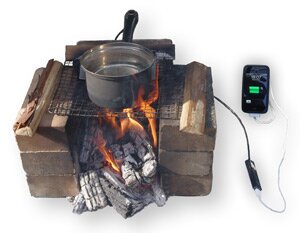
This Mobile Phone Charger Needs No Electricity (Pan Charger for Mobile Phone)

0 comments
The year 2000 witnessed our discovery of a oxide compound we have since developed into a material capable of converting heat-waste into electrical energy at unprecedentedly high temperatures. Thus, after a decade of research, we are pleased to confidently announce the establishment of TES NewEnergy
(Thermo Electric Systems and NewEnergy).

TES NewEnergy is born as a result of the work of AIST ( The National Institute of Advanced Industrial Science and Technology).

TES NewEnergy brings you a world of fresh cost-reducing possibilities, 
creating clean energy for incinerators, process plant , industrial furnaces, shipping, fueled vehicles, cookers/water-heaters, ubiquitous machinery etc. We can also provide emergency or back-up energy and even utilize geothermal energy.

We hope you join us as we expand renewable energy, reducing carbon-dioxide levels worldwide 


Heat exchanger type thermoelectric unit (water/air cooling)
 Specification

Waste heat temperature: 100-1000℃
Output power: 30-200 W
Dilatation is possible by combining units

ボックスユニット


Wall type thermoelectric unit (water cooling)

 Specification

Waste heat temperature: 200-1000℃
Max, output power density: 3.5kW/m2
(per heat receiving area)
Size: 14cm


壁面ユニット


 Specification

Brochure PDF


Directly converting heat into electrical energy Mobile Phone charging with boiling pan
Charging Mobile Phone During Emergencies


Enhanced by Zemanta
Read more...

Thursday, June 23, 2011

GSM Pocket Guide

0 comments
gsmpocket.pdf

This guide  includes the following Topics:

GSM system architecture

The Base station controller (BSC)

the mobile switching center (MSC):

The Home location register (HLR);

The visitor location register (VLR

The authentication center (AuC):

The mobile station (MS)

The equipment identity register (EIR):

The base station subsystem (BSS

Operation and Maintenance Center (OMC)

The base transceiver station (BTS)

Interfaces and protocols

GSM1900

GSM1800

GSM900

Logical channels on the air interface

The air interface Um

GSM Channels on Air Interface

Traffic channels on the air interface

Burst formats

The Abis interface

Protocols on the A interface

The A interface

MSC protocols

MSC-based interfaces

Alarm monitoring

Test and measurement problems in GSM

and more.........................

Source: W&G
Enhanced by Zemanta
Read more...

Wednesday, June 1, 2011

Urgent opening in a leading telecom company for specialist

0 comments
Experience required for Job: 7 - 11 years
Job Annual Salary: Not Mentioned
Job location: Bengaluru/Bangalore,Delhi/NCR


This is in regard of an urgent opening in one of the leading telecom company for Specialist: WRAN RF D&O.

Responsible for Optimization & design for improving the performance of the 3G radio network.


Hands on experience on GSM, CDMA or Wimax.
Knowledge of LTE.

Total experience: 7+ years

Degree: B.Tech/BE (Electronics & telecommunication)


If you or your friends are interested, kindly send me your updated resume or Call me ASAP or mail me for the
same.


Thanks & Regards
SUPRIYA
9818996321

mail : cv29@careershapers.in
Enhanced by Zemanta
Read more...

Saturday, May 14, 2011

URGENT OPENING WITH SWEDEN BASED MNC AT NOIDA AND GURGAON LOCATION

2 comments
This is to acknowledge that we have excellent job opportunity with SWEDEN BASED MNC at Gurgaon location.

Skills/Knowledge
Good Understanding of Telecom Networks with at least 3 years of experience in GSM. Excellent understanding of Core Network.
• Experience of operations and configurations in any customer service delivery organization/Telecom Operators.
• Experience on MSC/VLR and HLR.
Experience on NSS
Understanding of complete call flow in GSM system.
• Hands on experience on GSM nodes HLR / VLR / MSC / GMSC / AUC/ Media Gateway.
• Routing concepts (SCCP, GTRC etc.)
• Number Analysis - B.No. , GT, IMSI, MSRN etc.
• Very good concepts in CCS7 signalling, IP, ATM, ISDN and SIGTRAN.
• Knowledge on protocol level of CCS7, ISUP, SCCP, TCAP, MAP etc.
• Knowledge and experience of WCDMA.
• Experience on Ericsson products (AXE) will have an advantage.

Please note salary no bar for right candidate.


If you feel interested for the above mentioned profile, then share your CV/resume at (dimple@mnrsolutions.in )


Thanks & regds,
Dimple Dawra
MNR SOLUTIONS

Enhanced by Zemanta
Read more...

Tuesday, May 3, 2011

Field Application Engineering Manager for Gurgaon

0 comments
There's an urgent opening for Field Application Engineering Manager with a Fortune 500 Organization for Gurgaon location.

Exp: 6-12 years.
Qualification: B.E./ B.Tech (Any)

Job Profile:
•To be a part of the NPI (New Product Introduction) Team
•To interact with R & D and manufacturing for release of New Products
•Pre-screen Operator Application needs (site selection, frequency planning, etc…) and work with R & D to define system requirements
•Support Network Planning in all phases (development, I &C, and life cycle)
•Support Field Operations and the installation training program
•Drive regulatory planning with Operators
•Manage Test & Pilot site logistics
•Develop field support strategies and metrics
•Oversee Antenna system integration into the operators network
•Support Drive Testing in all phases
•Support field testing, analysis, and resolution of technical problems
•Interact with R & D to provide customer Inputs and field feedback

Experience required:
•Experience in the planning, installation, commissioning, troubleshooting, and operation of GSM / CDMA / 3G / 4G networks.
•Capable of working in a global environment.
• Exemplary written and verbal communication skills
•Proven customer, R & D, manufacturing, and vendor interface skills.
•Ability to work independently and leading a team.
•Willingness to travel.

Experience must :working on large projects covering all aspects of Bids & Quotes, Planning, Deployment, and Maintenance. Must be familiar with Operator deployment strategies. Must have worked on site planning and deployment; and must have significant experience in resolving technical issues in live networks with operators.

Kindly send your updates CV mentioning:
1. Total Experience in years:
2. Relevant Experience in years:
3. Current location:
4. Date of Birth:
5. Current CTC:
6. Notice Period:
7. Willingness to travel:

rgds

Manika
Quadrangle
A Division of Info Edge India Ltd.
+91120-4304610
(manika.srivastav@naukri.com)
Enhanced by Zemanta
Read more...

Sunday, May 1, 2011

Great opening for Gurgaon location:Sr. Manager in Telecom MNC

0 comments
An excellent opening one of the famous Telecom MNC at Gurgaon location.


Job Description

Sr. Manager

Experience- 10-13 Years

A. He has to be a Core Network O&M.

B. Knowledge of routing concepts (SCCP, GTRC etc.) and Number Analysis

C. Hands on experience GSM nodes HLR / VLR / MSC / GMSC / AUC/ Media Gateway.

D. Knowledge on protocol level of CCS7, ISUP, SCCP, TCAP, MAP etc.

E. Knowledge in R2MFC signaling

F. Knowledge and experience of WCDMA.

G. CCS7 network planning

I. Knowledge of IP / MPLS /MPBN.

J. Person has to interact with the Customer and have to manage the team along with the usual activities.

K. Should be well aware of the concepts for SS7 Protocols used for GSM/CDMA. Should have good understand for IP Basics.


Thanks & Regards
Bijender Kumar
bijender@mnrsolutions.in
Enhanced by Zemanta
Read more...
Related Posts Plugin for WordPress, Blogger...
 
IoT Vigyan © 2011 Main Blogger - Blogger Template & Blogging Stuff. Supported by PsPrint Emeryville and homeinbayarea.com