Showing posts with label Wi-Fi. Show all posts

Friday, July 19, 2013

Huge Smartphone Sensors Set To Revolutionize Science

0 comments

The latest Nokia smartphone, the 1020, comes with a massive 41 megapixel camera. Begging the question, is it a phone or a camera? This is the wrong question. All phones are camera. All cameras are phones (or will be – they will soon all have WiFi or ability to connect to the Internet). The question to me more is what happens when you connect a superior image capture mechanism to the Internet. Equally important, when you put that mega-phone into the razor-thin margin economics of hardware, prices will come down amazing fast. So now the question becomes, what can we do with this super camera?
At 41 megapixels we can get down to extremely granular detail on many things. Granted, the Nokia device here can’t do that. But the key is the sensor size, and that’s what is enormous on this phone as compared to its predecessors. With such a powerful sensor, you can deploy the phone for far greater uses. For example, a phone could now capture microscopic details in water, looking for particulate matter of bugs. A phone could capture very minute differentials in thread weaves or fabric shades to detect counterfeit clothes. A phone camera, mounted on a drone, could capture fine-grained color shifts in forest canopies to measure fire risk or species concentration. The phone becomes the scientific instrument.

We are already seeing this with many of the iPhone and Android accessories that attach cheap sensors to smartphones, delivering distributed scientific and medical information capture. From a smart jacket that is an FDA approved EKG for heart monitoring to water quality sensors, the phone is headed towards becoming an amazingly powerful data capture system to measure and monitor our physical world. This changes everything as what had been previously the province of high-end science becomes affordable to all and real-time, on-demand information capture replaces data captured rarely and at great expense.


Images and the visual realm are probably the richest sources of information. We are adept at building technology to process images, from the adaptive optics software used to correct images from giant telescopes to the nifty shake-correction software that runs in the Nokia phone. And our eyes are the most efficient sensors we have (by most arguments).  41 megapixels, of course, dwarfs the power of our eyes. And now that set of mechanical eyes is in our pocket, connected to the Internet.

Source:Internet
Enhanced by Zemanta
Read more...

Wednesday, May 29, 2013

World's First Wi-Fi Router That Does 40 Gbps Even From 1 Km Distance

0 comments

KIT, Karlsruhe Institute of Technology, Wi-Fi router, fastest, 240 GHzWith so many data hungry websites (and apps) surrounding us all through the day, a slow Internet connection is a bummer of sorts. Especially, if your wireless router does not allow you enough freedom to move and still have the same impact. So hold your breath as we tell you about a Wi-Fi router that can send a complete 2 hour full HD movie over a kilometre in less than a second! Don’t believe us? Well, researchers at the Karlsruhe Institute of Technology in Germany have managed exactly that. 

The hardware used to transmit the data at 240 GHz was created by KIT and has a set of chips that is capable of sending high frequency signals. In this case, the higher the frequency, the smaller the antenna size to pick up the frequencies, which means faster transfer of data. “The number of bits carried over the airwaves is in inverse proportion to that of the wavelength. This means, the shorter the wavelength, the more data can be transferred in a set period of time,” reports the official site of the Institute.

While the speed of a few MBs per second is becoming pretty common, at higher frequency, the moisture levels in the air affect the signal strength. Working on the issue, the research team realised that 240 GHz is the spot where interference from moisture is the least. “The frequency range between 200-280 GHz allows compact technical assembly as well. At 240 GHz, the size of the transmitter/receiver chip measures only 4 x 1.5 sq.mm,” Crazy Engineer reported

This can be a revolutionary breakthrough for areas where fibre optics is not an option and can even bring down the cost considerably. 


Source:Internet 
Enhanced by Zemanta
Read more...

Thursday, March 28, 2013

Lookout Security & Antivirus review

0 comments
Lookout, the mobile security suite designed to protect your Android smartphone, has just received a major update that brings a host of new features, as well as a complete redesign to match the latest versions of the Android UI. We've been using the new version for some time to see how well it works, and whether it's worth the download.
First impressions are great - the new UI is a huge improvement over the old one, which hadn't seen a major update since the app first launched in 2009. It fits in much better with the overall appearance of Android 4.0 Ice Cream Sandwich and 4.1 Jelly Bean, unlike other anti-malware apps which have their own distinct themes which contrast with the colour scheme of the operating system.
The menu interface is intuitive and easy to navigate, with all the important functions just a button press away on the home screen. Most of them are included with the free version of the app too, including the malware detection system which scans installed apps for malicious code, contacts backup and the ever-useful Find my Phone feature.
Lookout Mobile Security
Android security threats are nothing new – they are a very real problem of having an open source operating system that anyone can access the source code for and go digging for possible attacks. Lookout can protect against a staggering number of existing threats, and is constantly updating to protect against new ones as they appear in the wild. The main danger is with apps that redirect your calls through premium rate lines and SMS networks, costing you huge amounts of money - apps like Lookout make sure that doesn't happen.
We installed a range of different apps from the Google Play store, which all got scanned and passed clean before we started using them - it's an unobtrusive process that doesn't drag you away from whatever app you have running unless there's a problem, so you can simply install and forget about it.
Backup is completely transparent, saving both your contacts and call logs to the Lookout website. This lets you monitor your phone if its gets stolen, giving you a record to take to your network provider to prevent any unwanted charges.
Perhaps the best feature is Find my Phone - it uses the Wi-Fi, cellular and GPS signals from your phone to locate it on a map on the Lookout website, send you an email with its location and even let you activate a siren to help you find it if you've lost it down the back of the sofa.
Lookout Mobile Security
You can download Lookout for free, but you’ll only have access to its more basic features. For its more advanced functions such as Safe Browsing, Remote Lock & Wipe and Privacy Advisor, you’ll need to upgrade to the premium service. It costs £1.99 a month, or £20 annually, but whether you should pay will depend on how often you lose your phone or visit questionable websites.
The remote Lock and Wipe tool is a powerful one, letting you lock down your phone or completely erase it through the Lookout website. If you've lost your phone and can't locate it using the Find My Phone feature, or it's been stolen and you want to be sure your personal information can't be extracted, you can push a wipe command and factory reset the device.
Lookout Mobile Security
Safe Browsing can scan websites for malicious links and code, but only if you use the default Android browser - this is a big problem if you've made the switch to Chrome, or are running a custom ROM that lacks the default browser, as neither are compatible.
Source:Internet
Enhanced by Zemanta
Read more...

Tuesday, February 26, 2013

LG Shows Off 'World's Smallest' Wireless Charger

0 comments

Lg_charger
BARCELONA — LG is definitely one of the most active companies at this year's Mobile World Congress, having already shown several new smartphones and announcing it has acquired webOS from HP. It seems LG doesn't plan to stop there, as it just announced the "world's smallest" wireless charging device.
The WCP-300 is a little black pad, just 6.9cm in diameter. It's compatible with a standard 5-pin micro-USB charger, and complies with the Qi standards of the Wireless Power Consortium.
As for the devices that support it, there are two available in the U.S. market: the LG Spectrum and the Nexus 4. The freshly showcased LG Optimus G Pro also supports this technology, but we don't know when it'll become available in the U.S.
Like all companies trying to push wireless charging tech to the market, LG hopes more and more upcoming smartphones will have built-in support for this tech. LG itself plans to introduce smartphones with "more advanced" wireless charging tech in the global market.
The WCP-300 will become available next week in South Korea for about $60; a global and U.S. rollout is pending.
LG has also demonstrated their wireless Ultra HD Transmission technology, which enables fast delivery of high-resolution multimedia content from smartphones to TVs.

wireless ultra HD transmission
By "Ultra HD" LG means 4K video content, and the entire technology works by using Wi-Fi, but LG would not go into specifics. LG also claims the tech uses "less than half" the power of other similar technologies, and it does that by reducing the strain on the CPU and other hardware resources.
Of course, 4K content is still hard to find, which means this tech is currently merely a reminder of how one day we could all enjoy the wonders of 4K video and stream it around our house to whatever device we like.
Images courtesy of LG
Source:Internet
Enhanced by Zemanta
Read more...

Monday, January 28, 2013

Refrigerators are getting smart using Android

0 comments
Refrigerators are getting smart. A new model released earlier this month runs apps to help users browse recipes, create shopping lists and manage the expiration dates of items like yogurt and milk.

The T9000 refrigerator by electronics company Samsung has a 10-inch Wi-Fi-enabled touchscreen and includes apps such as Epicurious for recipes and Evernote for note-taking.

"The fridge, because it's the hub of the family and the kitchen, is now another access point without having to drag around your tablet or have your phone with you in the vicinity of where you're cooking or entertaining," said Warner Doell, a vice president in the home appliance division at Samsung Canada.

The display enables users to keep up with the news, weather and even Twitter from the fridge door. It can also replace hand-written calendars with Google Calendar integration, and run slideshows of photos, according to Doell.

Shopping lists can be created on the fridge with the Evernote app, which will sync to smartphonesand recipes can be found at Epicurious.

Source:Internet
Enhanced by Zemanta
Read more...

Saturday, January 26, 2013

60GHz point-to-point microwave for small cell backhaul

0 comments
 Millimetre wave dish

Backhaul for many public access and some enterprise small cell deployments involves a wireless link for the last few hundred metres. It may not be feasible to connect fibre in every case, both because time and cost are prohibitive. One of the choices for that last hop is point-to-point microwave operating at 60GHz (Extremely_high_frequency).
Why 60GHz?
Wireless transmissions at these frequencies are limited by the high oxygen absorption, with a maximum range of 2 kilometres. This matches the requirement for small cell backhaul links of a few hundred metres – typically the range 100 to 700 metres being the sweet spot. The signal won't penetrate buildings or foliage, requiring clear line of sight between transmitters but multiple links can be used to relay the signal around obstructions. By using a parallel uplink and downlink, bi-directional data rates of up to 1Gbit/s are available in commercial products today. Constraining the link data rate to 100Mbit/s or 300Mbit/s allows lower order modulation to be used, either increasing the range or further enhancing link reliability. The short range and narrow beams provide very high reuse, making it ideal for those high traffic urban areas.
The use of such high frequencies require a smaller physical dish antenna, which matches the low profile and form factor needed to satisfy town planning constraints.
Transmissions are affected by rain, which reduces maximum operating range of each link. For the shorter distances of a few hundred metres needed for small cell deployments, five nines (99.999%) uptime is quite achievable.
Licence Exempt Spectrum
Many countries have taken a pragmatic approach to the use of the 60GHz spectrum, assigning it as “Licence Exempt”. This has a slightly different interpretation compared with “Unlicensed”, as is used by Wi-Fi. Since these signals very rarely interfere with each other because they are point-to-point beams, they can co-exist with competitors even in high traffic congested areas. Regulators may require a nominal fee to register, or simply allow unconstrained deployment nationwide.
By comparison, other popular spectrum bands used for microwave links may attract hefty spectrum licence fees. It is not unusual for network operators to pay millions of dollars for the rights to specific bands for nationwide use, equating to thousands (or even tens of thousands) of dollars per link installed.
Providing high capacity
The high throughput rates of up to 1Gbit/s should more than satisfy the needs of advanced multi-mode small cells. Alternative solutions which share spectrum or resource between a cluster of cells may not be able to match the peak throughput of the radio links they service. This problem also occurs where Wi-Fi or other unlicensed/shared spectrum is used for backhaul, or where licensed spectrum for backhaul use is scarce.
Today's individual small cells may be more than adequately served with a backhaul link capacity of 100Mbit/s. Multiple small cells, daisy chained along a street canyon, may increase that requirement to 300Mbit/s or more. In the future, LTE Advanced and Multi-mode 3G/LTE small cells could reach peak traffic rates of 500Mbit/s to 700Mbit/s, which would be within the 1Gbit/s capacity of the technology.
Low Latency
An advantage of FDD links of this type is low latency, typically sub 50 microsecond, and so this doesn't affect the end-user experience. TDD links on the other hand would naturally add some delay due to the buffering while waiting for the next transmission slot. With LTE offering end-to-end latency in the order of 10's of milliseconds, this may be considered significant.
Network synchronisation can be provided using IEEE 1588 to augment the small cell's own GPS timing. It is also likely that we'll see more SyncE (Synchronous Ethernet) extended through these links in the near future.

Source:Internet
Enhanced by Zemanta
Read more...

Wednesday, January 23, 2013

A Dual-Screen Smartphone

0 comments

Dual-screen smartphones are few and far between, but NTT DoCoMo and NEC apparently think a pair of displays is better one one, hence the new clamshell Medias W N-05E announced in Japan today. Joining two qHD 960 x 540 4.3-inch screens with a hinge on the right, allowing the display on the rear to be twisted forward and make for an almost-square 960 x 1080 touchscreen.
ntt_docomo_medias_w_n-05e

Inside, there’s a 1.5GHz Qualcomm Snapdragon MSM8960 processor paired with 1GB of RAM, running Android 4.1, along with a 2,100 mAh battery, WiFi, Bluetooth, and GPS. The rear camera runs to 8-megapixels, and there’s a front-facer too; the 16GB of internal storage can be augmented with a microSD card (up to 32GB in size). Connectivity includes LTE.
It’s not the first time we’ve seen an NEC clamshell of this sort. A little less than a year ago, the company showed off a prototype of this very handset, though without any hardware details or, in fact, a working concept.
qwerty
The two displays can be used as a single, stretched panel, or to run two apps independently. It’s also possible to flip the N-05E by 90-degrees and use the bottom panel as a sizeable touchscreen keyboard.
NTT DoCoMo claims the new phone will last up to 460hrs on LTE standby (up to 630hrs if on 3G), while talktime is up to 500 minutes on a 3G network. Of course, talking is a very different proposition from using two potentially-power-hungry displays, and you’ll have to accomodate a 12.2mm thick device in your pocket or bag.
That power issue is arguably what has prevented twin-screen phones from storming the market. Kyocera attempted it, with 2011′s Echo, and Fujitsu flirted with doubled-up displays even earlier, but battery concerns – and a shortage of apps to take explicit advantage of the extra screen – have kept the impact minimal.
NTT DoCoMo will offer the Medias W N-05E from April in Japan, though there’s no word on whether NEC will sell the smartphone elsewhere in the world.
Source:Internet

Enhanced by Zemanta
Read more...

Wednesday, January 16, 2013

Asus Claims the Title of World’s Smallest Wi-Fi Router

0 comments
Amongst all of its Windows 8 PCs and tablet announcements at CES, Asus also quietly revealed what it's boasting as the world's smallest Wi-Fi router. And with a form factor only slightly larger than a well-equipped flash drive, the WL-330NUL Pocket Router is the perfect accessory for minimalist road warriors.
Weighing in at just 25 grams, the 802.11b/g/n router includes an ethernet port on one end for sharing a wired connection, and a USB cable on the other for stealing power from a computer. It can also be plugged into an outlet if you want to spare your laptop's battery. For ultra-thin notebooks lacking an ethernet port, the WL-330NUL doubles as a USB ethernet adapter too. As for pricing and availability, that's still to be announced.
Asus Claims the Title of World's Smallest Wi-Fi Router
Enhanced by Zemanta
Read more...

Thursday, January 10, 2013

Audi unveils in-car 4G LTE wireless broadband

0 comments

Audi AG has unveiled the 2013 Audi A3 with 4GLTE wireless connectivity powered by the second generation Gobi multi-mode 3G/4G LTE chipset, the MDM9215, by Qualcomm Technologies, Inc., a wholly owned subsidiary of Qualcomm Incorporated at the Consumer Electronics Show in Las Vegas.
With peak data rates approaching 100 megabits per second, the enhanced “Audi connect” services in the A3 are expected to transform the user experience and provide enhanced features such as an in-car Wi-Fi hotspot, Internet radio, Web services and an augmented navigation system that presents street level visual imagery streamed to the vehicle.
“Audi was the first automaker to highlight the potential for LTE connectivity in vehicles at CES 2012 and now becomes the first automaker to announce a commercial model with embedded 4G LTE connectivity,” said Ricky Hudi, chief executive engineer of electrics/electronics, Audi AG.“As a highlight, we will soon be offering a fully integrated LTE link for our Audi connect services in the new Audi A3 in 2013.”
The Gobi MDM9215 chipset will be implemented by Audi in the automotive module. The solution will power Audi connect with 4G LTE speeds and is designed to enable enhancements to real-time navigation, weather and travel information while providing ultra-fast Wi-Fi hotspot access for up to eight devices in the car.

Qualcomm has been embedding its Gobi technology with leading automakers for more than a decade and is currently the largest supplier of 3G and 4G technologies and chipsets for passenger-car telematics and connected-car services, with tens of millions of connected vehicles in operation worldwide.
“We hope to introduce to automobiles the same 4G LTE connectivity that Qualcomm brought to today’s leading smartphones and mobile computing devices,” said Kanwalinder Singh, senior vice president of business development, Qualcomm Technologies, Inc.“The capabilities ofthe MDM9215 chipset allows Audi to define a new in-car media experience, including viewing and interacting with content on the headunit as well as on passengers’ own Wi-Fi-connected smartphones and tablets, all at 4G LTE speeds.”

Source:Internet
Enhanced by Zemanta
Read more...

Wednesday, December 12, 2012

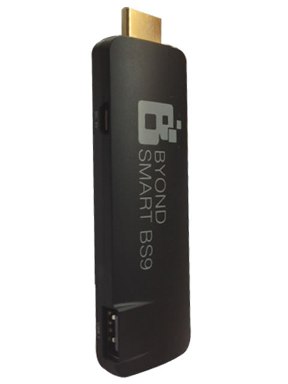
A portable dongle that coverts an LCD TV into a Smart Android TV

0 comments


ByondTech Electronics on Monday has launched ‘BS9’, a portable dongle that coverts an LCD TV into a Smart Android TV. The devise would be priced at Rs.6750 and shall be made available through all leading TV and Telephone stores and would also be sold online through sites like Flipkart and Snapdeal.

The trend setting product was unveiled in Pune by Prashant Bora, CEO, BYOND Tech. Prashant Mutha, Chairman and Rajendra Nahar, Director, Commercial, BYOND Tech were also present on the occasion.
The ‘BS9’ devise would be equipped with a specially designed keyboard and Air Mouse to make your experience wire free and hassle free. All you need is the LCD TV with HDMI Port and Wi-Fi connectivity.

“With the launch of ‘BS9’, we are introducing a solution to make your existing TV smarter and that too at a very affordable cost, which is not only much less as compared to the cost of Smart Television sets available in the market but is also with loaded with many features of a Smart TV”, said Prashant Bora.

“It is a small portable Dongle that can be connected to TV by inserting it directly into the HDMI port or by using the HDMI Cable provided with ‘BS9’. The devise is then required to be connected to internet using Wi-Fi and once the connection is established it acts as a Smart TV, where you can access emails, play online games and do everything with the power of internet and Android applications”, he added.

It would come out to be very handy for all those who wish to enhance the power of their exiting TV to get access to entertaining online gaming, online streaming and many more.
Enhanced by Zemanta
Read more...

Thursday, December 6, 2012

Cheapest Tablet Aakash 2's first lot not for students: Government

0 comments
 
The recently developed Aakash-2 tablet is for the purpose of testing and empowerment of teachers and there is no proposal to provide these to students from poor and rural backgrounds, the government told Lok Sabha today.

In a written reply, Union Human Resource Development Minister, MM Pallam Raju said, "Presently there is no proposal in this regard... In the first phase one lakh tablets are for the purpose of testing and teacher empowerment. They would not be distributed to students in the first phase."

He was asked whether the government is planning to provide Aakash 2 tablets free of cost to students, particularly to the rural and poor students belonging to the weaker sections of the society.

The advanced version of low cost access device Aakash 2 tablet was launched by President Pranab Mujherjee on occasion of National Education Day on November 11, this year, Raju said.

"The salient features of Aakash-2 tablet includes seven inch multi-touch capacitive projective display with at least 800x480 resolution. It runs on Android 4.0 (ice-cream sandwich) operating system, powered by 1GHz processor and HD video playback support," the minister said.

The device has Wi-Fi support for internet connectivity with four GB internal memory storage and a microSD card slot that can support cards having capacities up to 32GB.

Enhanced by Zemanta
Read more...

Saturday, November 17, 2012

Wifox – Software that increases WiFi performance by 700 percent!

0 comments
WiFi provided in public places tend to be very slow, especially when large audiences are hooked into it (which is generally the case most of the time). In the name of free internet access, we tend to fret over the slow speed. The problem isn’t that the WiFi is slow, but the requests are either many or heavy which in turns degrades the internet speeds.
To solve this problem, researchers from North Carolina State University, Arpit Gupta ( Ph.D. student computer science), Jeongki Min (Ph.D student) and Injong Rhee (professor, computer science) have developed WiFox. WiFox when tested in a lab with a real WiFi system improved performance with increase in number of users.
The result was: for 25 users, 400% improvement and for 45 (which was the capacity of the WiFi), 700% improvement.
Wifox – Software that increases WiFi performance by 700 percent!
How does WiFox work –
Basically if too many users are accessing a ‘access point’ via the same channel
  1. There are too many requests and the access point is unable to send the requested data
  2. If access point overrides the requests (by giving it a high priority) then the requests wont be submitted
The WiFox regulates the flow between the two issues by monitoring the amount of traffic. If the response (requested data being sent) is backlogged at the access point, it provides an access point priority. The longer is the backlog, the higher is the priority
“One of the nice things about this mechanism is that it can be packaged as a software update that can be incorporated into existing WiFi networks,” says Arpit Gupta “WiFox can be incorporated without overhauling a system.”
So basically it can be installed as a patch into existing systems, taking care of any legacy issues. Not only does WiFox smoothen the downlink throughput, but also reduces the average response time.
This will be great news for WiFi providers in public places and a no-brainer for them to implement it on their existing hot-spot network.
According to the press release, the paper, “WiFox: Scaling WiFi Performance for Large Audience Environments,” detailing out WiFox software will be presented at the ACM CoNEXT 2012 conference being held in Nice, France between Dec. 10-13th. 
[Via: TNW]
The post Wifox – Software that increases WiFi performance by 700 percent! appeared first on India Business & Technology Hub.
Enhanced by Zemanta
Read more...

Thursday, November 15, 2012

Blackberry Messenger gets Voice over Wi-Fi!

0 comments
Whatsapp meets Viber… This is what I would call what Blackberry Messenger (fondly called BBM) has decided to do.
BBM needs no introduction and it is one of the key components what made Blackberry what it is was.
Blackberry has now decided to beef up its Messenger to add even more functionality to it. The newest version, 7, of BBM can now be used to call other BBM users over WiFi. It would have been better if this functionality extended to Cellular connections as well, but it is a good start nonetheless.
Blackberry Messenger gets Voice over Wi Fi!
This is now a much needed capability which people are using more often with companies going global. Blackberry is a predominant Enterprise solution company. Their phones still find a soft corner in the hearts of professionals and with this functionality, Blackberry has given them something to be happy about till BB OS 10 comes out.
BBM 7 will be available for BB OS 6.0 onwards with support for OS 5.0 also coming in the future. Right now, it is in the beta phase and you can get it here.
The salient features are-
  1. Customers can initiate a BBM Voice call directly, or instantly switch from a BBM text chat to talk, and back again.
  2. The split-screen feature allows customers to talk and text at the same time, so for example, they can send a picture to their contact while talking with them. They can also check other BBM text chats, check email, or navigate to other apps while engaged on a BBM Voice call.
  3. BBM provides a visual indicator that shows when contacts are available for a voice call.
  4. BBM Voice is compatible with any accessories a customer has now for making voice calls on their BlackBerry smartphone, such as a Bluetooth or wired headset. Customers can also use BBM Voice over their BlackBerry smartphone’s speakerphone.
  5. If it’s not an ideal time to talk, customers can simply choose to respond by texting back.
Looking at these features we can say that the focus is completely on productivity. Also, BBM 7 is now integrated with customer’s Blackberry ID. This is a welcome addition as it will make switching to a new Blackberry phone for a person more streamlined.
It is good to see Blackberry in action again. They have already pinpointed the date for the release of their new OS and with this update it looks like Blackberry is preparing itself for a good fight. Though it may be too little, a bit too late.
The post Blackberry Messenger gets Voice over Wi-Fi! appeared first on India Business & Technology Hub.
Enhanced by Zemanta
Read more...

Thursday, November 1, 2012

Wi-Fi in Your Life

0 comments


No matter what your lifestyle is, Wi-Fi technology can play an important role in making it more productive, convenient and fun.   Wi-Fi uses radio waves - just like cellular phones, TV and radio - to create reliable high-speed connections between computers, printers, gaming devices, cameras phones and home entertainment systems. You can use Wi-Fi in your home, at work or on-the-go at hotspots worldwide.
Wi-Fi connects you ... to your office, your family, your entertainment, to the world.  It's available in thousands of devices and millions of locations, and it's easy to set up and use.
Wi-Fi has something for everyone.  If you are new to the technology, you'll love how it enables you to connect on the go and share an internet connection at home.  And if you have used Wi-Fi for a while now, you might like to find out more about how it can connect a huge variety of productivity and entertainment tools.
Make the Wi-Fi Alliance your trusted resource for Wi-Fi information.  Here are some good starting points:
Enhanced by Zemanta
Read more...

Monday, October 15, 2012

Hammacher Schlemmer Offers Wireless Smartphone Photo Printer

0 comments
Hammacher Schlemmer has introduced a new device called the Wireless Smartphone Photo Printer that makes printing photos easier for those who are always on-the-go.

To use it, one needs to download a free app which transmits images from a mobile device to the printer through a Wi-Fi network, eliminating the need for cables. The device is compatible with Android-based devices with a minimum of OS 2. Meanwhile, the Apple devices supported are all models of the iPhone, including the most recently-released iPhone 5, the iPod Touch with at least iOS 3, and the iPad.
The Wireless Smartphone Photo Printer comes with a replaceable print cartridge is capable of printing  borderless photographs measuring 4 x 6 inches with a resolution of 300 dpi, and as much as 16.7 million colors and 256 gradations. It does so reportedly in less than one minute. Consumers may also order a replacement printer cartridge which costs $24.95.
Unlike many printers available today, the Wireless Smartphone Photo Printer does not make use of ink cartridges, but prints images on a special paper. Such paper is packed with cyan, magenta, and yellow dye crystals. The resulting photos are scratch-resistant, dust-resistant, fingerprint-resistant, and waterproof.
The Wireless Smartphone Photo Printer sells for $219.95. It may be ordered from the Hammacher Schlemmer website. Purchasing the printer provides users with a paper cartridge that offers 10 prints. The device has dimensions of 7 x 6 x 4 and weighs 3 lbs. It furthermore has the Hammacher Schlemmer Lifetime Guarantee, which means that users may return the item “for exchange, credit, or refund” if it disappoints them.
Hammacher Schlemmer is said to be “America’s longest running catalog,” which has been in existence since 1848. It is known for offering items that are innovative and unexpected. It also offers similar products with the Wireless Smartphone Photo Printer such as the iPhone Photo Printer, and the One Step Photograph And Slide To iPhone Converter.

Source: Internet
Enhanced by Zemanta
Read more...

Saturday, October 13, 2012

Job | Looking for WLAN Testers for Test Lead Position @ Bangalore

0 comments
Tata Elxsi invites you to come and be a part of this dynamic and powerful group.

About Us:
Tata Elxsi Ltd. is a part of the Tata Group of Companies. Seamlessly integrating precision and ingenuity, our abilities stem from our creative leadership in hard-core technology and strength in design. Augmenting these capabilities is our expertise across our practice areas to provide point services and end-to-end solutions across the product lifecycle. From Automotive to Aerospace, Bioinformatics to Consumer Electronics, Entertainment to FMCG, media to Storage, Semicon to Telecom, we provide customized design solutions to companies across the globe. Conforming to strict processes, a highly motivated skilled workforce driven by strong design principles! And ethical business practices ensure cost-effective, time-to-market solutions. Touching people's lives in myriad ways! , Tata Elxsi's solutions can impact directly or subtly, leaving a mark of excellence in its wake.

With over two decades of experience, Tata Elxsi has stamped its presence on the Indian market and leads the Indian IT industry. Headquartered at Bangalore, our business spans India, Japan, USA, UK, France, Germany, South Korea, Taiwan and some of the Asia pacific countries.
At Tata Elxsi, we offer you a work environment that quenches your thirst for knowledge while helping you nurture your career ambitions. You get to traverse a path that is strewn with values, performance, learning, innovation, quality, camaraderie, and career growth - all those facets of work life that you cherish the most.

We are looking for dynamic professionals with below experience

Job Identification: Test Lead
Yrs of Experience: 8 - 12Yrs
Qualification: BE / B.Tech / MCA / ME / M.Tech / MS
Work Location: Bangalore

Skill set:
* Knowledge and understanding of WLAN 802.11a/b/g and WLAN features WMM, WPA, u-APSD and 802.1x based authentication schemes.
* Experience with Wi-Fi, WLAN, 802.11a/b/g/n standards.
* Direct work experience with network monitoring and protocol analysis tool such as Wire Shark/Ethereal/Chariot. Experience testing and working with different access points and stations.
* Experience in writing and evaluating test cases and execute test plans for protocol validation of WLAN 802.11a, 802.11b, 802.11g, 802.11n Protocols and WLAN feature tests in areas of RF and Security
* In depth knowledge and understanding of LAN/WLAN network technologies is a must (TCP/IP, Ethernet, etc.). WLAN Controller experience is a must.
* Must be able to use network analyzers to pin-point and isolate problems
* Experience in scripting language Tcl/Expect, Perl
* Working knowledge on Windows, Linux, and/or Linux variant OS
* Be able to write and execute test plans
* Able to work independently.
* Good interpersonal and organizational skills.
* Expertise on tools Veriwave/Azimuth/Ixia/Chariot

Responsibilities:
* Responsible for testing, verifying and debugging WLAN Controller software.
* Individual contributor with an opportunity to build a test team in the Embedded Wi-Fi area.
* Lead the QA team responsible for all software quality efforts including platform/feature testing, system testing, regression testing, and interoperability testing.
* a) Execute test plans and compile test reports for internal and external releases
b) Must be able to use network analyzers to pin-point and isolate problems
c) Expertise with the following tools is highly recommended:
1) Veriwave
2) Ixia ,IXIA Chariot
3) Azimuth
d) Providing technical support to the team members.


If your candidature matches with the above requirement and you want to explore this opportunity kindly revert with your update profile and with the following details

Current CTC:
Expected CTC:
Notice Period:


Best Regards,
Thangamani N
Executive- Recruitments | CSF
TATA ELXSI
ITPB Road, Whitefield, Bangalore-560 048, India.
Tel  +91 80 2297 9987 
www.tataelxsi.com

Enhanced by Zemanta
Read more...

Saturday, July 28, 2012

Broadcom introduces 5G WiFi Combo chip for Smartphones and tablets

0 comments


Broadcom Corporation, a global innovation leader in semiconductor solutions for wired and wireless communications, has introduced the BCM4335, the industry's first complete 5G WiFi combo chip for smartphones, tablets, ultrabooks and other mobile devices.

The new solution furthers Broadcom's wireless connectivity leadership and establishes it as the first chip vendor to sample solutions based on the 802.11ac standard for every major Wi-Fi product segment.

5G WiFi, the 5th generation of Wi-Fi based on the IEEE 802.11ac standard, is a major evolutionary step from the existing 802.11a/b/g/n networks. 5G WiFi dramatically improves the wireless range in the home, allowing consumers to watch HD-quality video from more devices, in more places, simultaneously. With 3X faster speeds, consumers can download web content from a mobile device, and synch large files such as videos, in a fraction of the time it would take on a similar 802.11n device. Since 5G WiFi transfers the same volume of data at a much faster rate, devices enter low-power mode quickly and, as a result, are up to six times more power efficient than equivalent 802.11n solutions.

Broadcom introduced its family of 5G WiFi chips for access points and PCs at CES in January 2012.  The world's first 5G WiFi routers and notebooks powered by Broadcom's 5G WiFi chips were introduced to the market in Q2 2012. Smartphones and tablets powered by the new BCM4335, which are expected to hit shelves in Q1 2013, will allow consumers to reap the full speed, range and power saving benefits of 5G WiFi on both ends of the wireless connection.
Enhanced by Zemanta
Read more...

Wi-Fi Standards -802.1p

0 comments

802.11p / DSRC / WAVE

In July 2010, IEEE published the IEEE 802.11p™- 2010 standard.

The standard defines mechanisms that allow IEEE 802.11™ technology to be used in high speed radio environments typical of cars and trucks. In these environments, the 802.11p enhancements to the previous standards enable robust and reliable car-to-car and car-to-curb communications by addressing challenges such as extreme Doppler shifts, rapidly changing multipath conditions, and the need to quickly establish a link and exchange data in very short times (less than 100 ms). Further enhancements are defined to support other higher layer protocols that are designed for the vehicular environment, such as the set of IEEE 1609™ standards for Wireless Access in Vehicular Environments (WAVE).
802.11p supports Intelligent Transportation Systems (ITS) applications such as cooperative safety, traffic and accident control, intersection collision avoidance, and emergency warning. 802.11p will be used for Dedicated Short Range Communications (DSRC), a U.S. Department of Transportation project as well as the name of the 5.9 GHz frequency band allocated for the ITS communications. More information on the 802.11p standard can be obtained from the IEEE.

Testing Wireless Devices for Vehicular Communications

802.11p operates in the 5.835-5.925 GHz range, divided into 7 channels of 10 MHz each. For testing of 802.11p devices, LitePoint has developed an ad-hoc operating mode in its current WiFi (IQview/IQflex) and Multi-Radio (IQ2010) test platforms.
The LitePoint IQview/IQflex and IQ2010 test platforms contain a Vector Signal Analyzer (VSA) and Vector Signal Generator (VSG) offering full transmit and receive test capabilities for 802.11p devices, in addition to other wireless connectivity standards.
Enhanced by Zemanta
Read more...
Related Posts Plugin for WordPress, Blogger...
 
IoT Vigyan © 2011 Main Blogger - Blogger Template & Blogging Stuff. Supported by PsPrint Emeryville and homeinbayarea.com